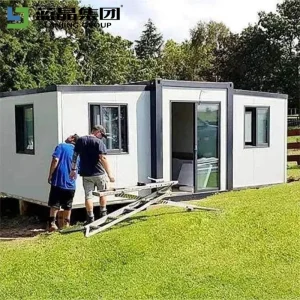
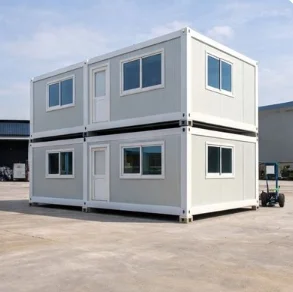
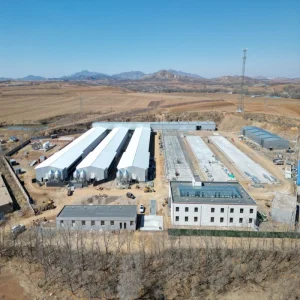
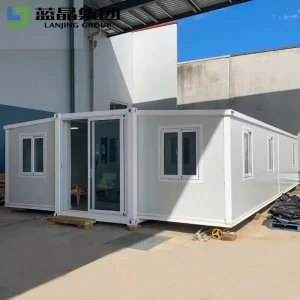
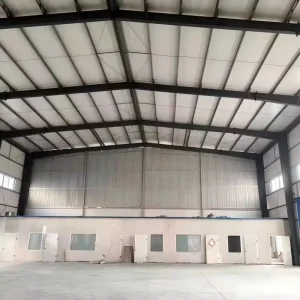
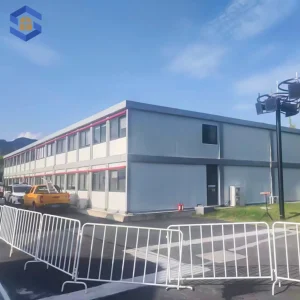
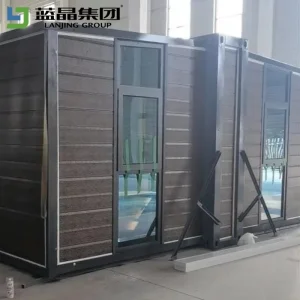
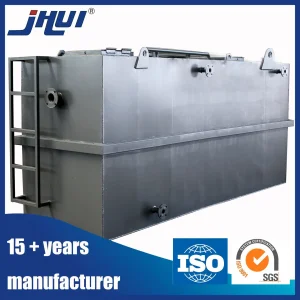
In an era of rapid urbanization and volatile industrial demands, the construction industry is undergoing a paradigm shift. Traditional brick-and-mortar methods are increasingly supplemented—and sometimes replaced—by Temporary Prefab Accommodations. This shift is not merely about speed; it is about precision, environmental sustainability, and the logistical agility required for modern global infrastructure projects.
From disaster relief efforts in remote regions to sophisticated worker camps for mining and oil sectors, modular housing systems have emerged as the backbone of modern site logistics. Unlike traditional structures, these facilities are manufactured in factory-controlled environments, ensuring high-grade E-E-A-T (Experience, Expertise, Authoritativeness, Trustworthiness) compliance in every bolt and panel.
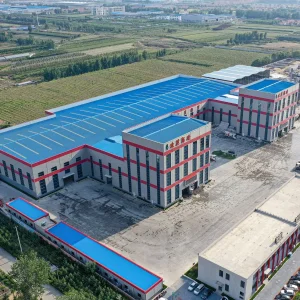
China has solidified its position as the premier exporter of modular building systems. The secret lies in the Industrial Ecosystem Advantage. Chinese manufacturers like Dongguan Detzer Homes Co., Ltd. leverage massive economies of scale and highly integrated supply chains to provide cost-effective solutions without compromising on the quality of raw materials like galvanized steel and advanced insulation cores.
Off-site completion rate
Reduced carbon footprint
Manufacturing Efficiency
The versatility of prefab modular units allows them to serve diverse sectors:
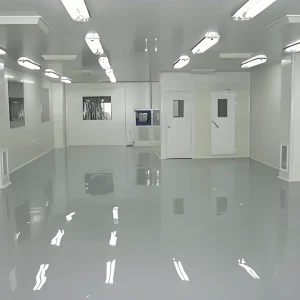
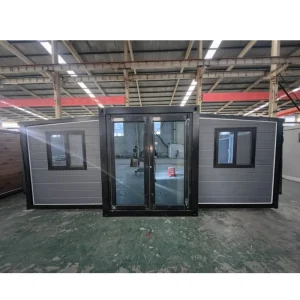
Dongguan Detzer Homes Co., Ltd. is a leading manufacturer specializing in clean room systems, prefabricated building solutions, and steel structure construction. With years of industry experience, the company integrates design, engineering, production, and installation to deliver high-performance building systems. Whether it is a CE-certified air filter system for pharmaceutical facilities or a robust expandable container house for residential use, our expertise spans the full gamut of modular requirements.
The trend is moving toward "Smart Prefab." Future modular designs are integrating IoT sensors for climate control, renewable energy integration (solar panels), and circular design principles that allow for the dismantling and recycling of components. For global procurement managers, the key is partnering with manufacturers that hold international certifications (ISO, CE) and have a proven track record of handling international logistics.
Q: How do I ensure the structural integrity of modular prefab buildings?
A: Reputable manufacturers use high-tensile galvanized steel and rigorous engineering calculations. Ensure your supplier complies with ISO international standards and provides detailed structural reports relevant to your region's seismic and wind zones.
Q: Can these prefab units be customized for specific industry needs?
A: Absolutely. From specialized cleanroom filtration for pharma to insulated walls for extreme climates, modular systems are highly customizable. Detzer Homes, for instance, offers tailored R&D and design integration services.
Q: Are prefab buildings truly eco-friendly?
A: Yes. Factory-controlled manufacturing produces significantly less waste compared to traditional construction. Furthermore, modular buildings are often designed for disassembly, meaning materials can be reused or recycled at the end of the building's lifecycle.
 Detzer Homes