Reducing steel structure costs does not mean choosing the cheapest steel or removing essential safety measures. It means controlling design, procurement, fabrication, transport, and installation as one connected process. In practice, a small change in column spacing can reduce tonnage, welding hours, and foundation loads. However, that same change may increase connection complexity or site risks.
This guide explains how to reduce costs in steel structure projects through measurable, professional decisions. It considers structural efficiency, accurate quantity takeoffs, suitable steel grades, standardized connections, and competitive supplier evaluation. Experienced project teams often review shop drawings before fabrication begins. A five-minute drawing check can prevent expensive cutting, rework, or delayed deliveries. It also helps to compare supplier quotations carefully, because a low material price may exclude coating, testing, packaging, or transport.
Details matter.
Cost control should follow approved engineering calculations, applicable building codes, and documented quality procedures. Qualified structural engineers, fabricators, and inspectors must remain involved when design changes affect safety or durability. Digital models can identify clashes, while factory inspections can confirm plate thickness, weld quality, and corrosion protection. Yet no software replaces practical judgment. A model may appear efficient but ignore crane access, welding positions, or crowded site conditions.
Some savings ideas will fail after closer review. That is normal. The reliable approach is to test each proposal against safety, schedule, maintenance, and total project value. This article offers a practical framework for making those comparisons, reducing avoidable waste, and protecting long-term performance without compromising responsible engineering.
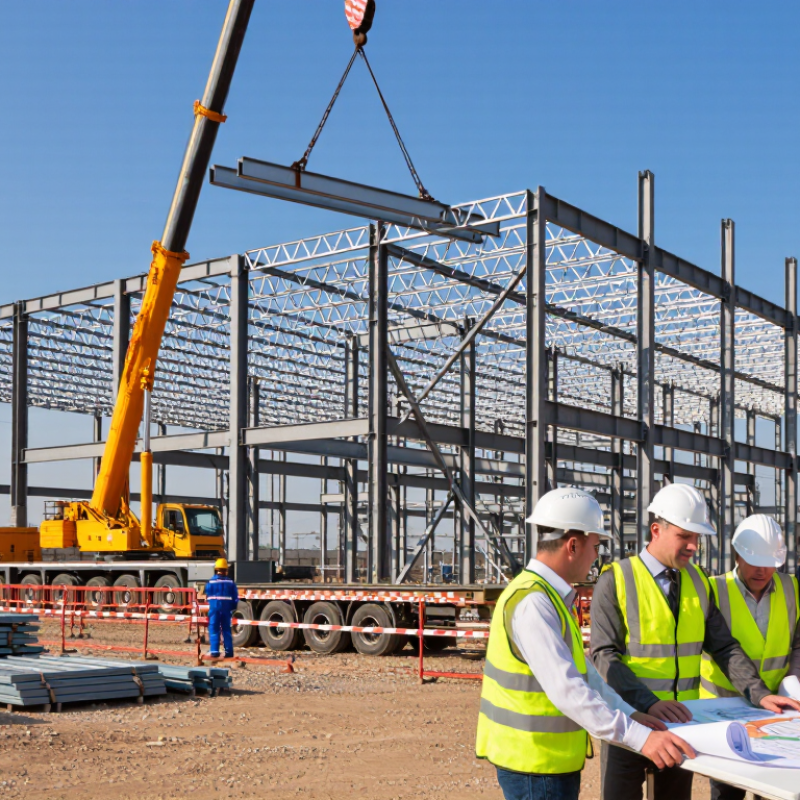
Define the Cost Drivers in a Steel Structure Project
Steel project costs begin with cost drivers, not with the final quotation. Material weight is the clearest driver. World Steel Association data reports 1,892.6 million tonnes of crude steel production in 2023. Construction and infrastructure consume roughly half of global steel demand. A small increase in structural weight can therefore affect purchasing, welding, transport, and erection costs. Engineers should review member sizes, connection details, and design loads before issuing fabrication drawings.
Complexity is another major driver. Numerous connection types, tight tolerances, curved members, and late design changes increase shop hours. RICS research in its 2024 Global Construction Monitor identifies material prices, labor availability, and project delays as continuing industry constraints. These risks often appear separately in estimates, but they interact on site. A delayed delivery may create overtime, storage fees, and crane rescheduling. The original estimate then becomes misleading.
Keep assumptions visible. Record steel tonnage, coating area, fire protection, transport distance, erection duration, and expected waste. Compare each assumption with supplier quotations and recent regional rates. I have seen low bids fail because temporary works were excluded. That mistake is expensive. A practical estimate should test three scenarios: stable prices, delayed procurement, and design revision. The uncomfortable point is that experienced teams also overlook small interfaces. Reviewing them with fabricators and erectors can reduce surprises more effectively than cutting specifications.
Optimize Structural Design and Material Specifications
How to Reduce Costs in Steel Structure Projects?
Optimizing structural design can reduce steel tonnage without weakening safety or serviceability. Start by clarifying loads, spans, equipment zones, and future expansion needs. A clean load path often allows smaller beams and simpler columns. Regular bay spacing also reduces cutting, welding, and erection time. However, the lightest design is not always the cheapest option. I have seen thin members create expensive connection details and difficult site adjustments. A qualified structural engineer should verify every optimization against applicable design codes, deflection limits, fire requirements, and construction tolerances.
Material specifications deserve the same attention. Select steel grades according to actual strength, availability, weldability, and exposure conditions. Higher-strength steel may reduce weight, but it can increase fabrication controls or procurement costs. Standard plate thicknesses and commonly available sections often prevent unnecessary delays. Consider corrosion protection early, especially around drainage points, open joints, and exposed edges. Small specification decisions become expensive later.
Tips: Compare at least two framing layouts before final design. Review connection weight, not only member weight. Ask fabricators about standard section availability and cutting losses. Keep drawings precise, but allow realistic erection tolerances. Recheck assumptions after supplier feedback; an elegant calculation may still fail in the workshop.
Compare Suppliers, Fabrication Methods, and Procurement Plans
How to Reduce Costs in Steel Structure Projects?
Reducing steel structure costs starts with comparable information, not the lowest quotation.
Ask each supplier for the same drawings, material grades, coating systems, tolerances, and delivery terms. Compare the full landed cost. Include freight, unloading, inspection, rework risk, and site storage.
A supplier with a cheaper tonne price may cost more through slower delivery or higher waste. Request mill certificates, welding procedure qualifications, quality records, and recent delivery references. I also check production capacity against the project schedule. An impressive workshop means little if fabrication slots are already full.
Keep records.
Fabrication methods affect both price and site labor.
CNC cutting can reduce waste, while repetitive bolted connections may shorten erection time. Welded assemblies can suit complex geometry, but they need careful inspection and transport planning.
Ask for a fabrication trial or sample connection before releasing the full order. Procurement plans should match cash flow and the construction sequence. Buy long-lead steel early, but avoid stacking material months before foundations are ready.
Phased purchasing can protect cash, though it may reduce volume discounts. Keep a small contingency for price movement, design changes, and damaged pieces. My own project reviews have not always favored the cheapest plan.
One low bid looked efficient until missed delivery windows created crane downtime. The lesson is uncomfortable: a perfect spreadsheet cannot repair weak coordination.
Control Fabrication, Transportation, and On-Site Installation Costs
How to Reduce Costs in Steel Structure Projects?
Control Fabrication, Transportation, and On-Site Installation Costs
Cost control begins before steel reaches the workshop. Clear drawings reduce revisions, idle labor, and material waste. I have seen small design changes create large fabrication bills. Standardizing beam sizes can simplify cutting and welding. Accurate quantity takeoffs also prevent expensive last-minute purchases. However, standardization should not override structural requirements. Safety and load performance remain non-negotiable.
Fabrication costs improve when production follows an approved sequence. Shop inspections should check dimensions, weld quality, bolt holes, and surface preparation. Early inspection is cheaper than repairing defective members later. Transport planning needs equal attention. Measure every load, confirm route limits, and group members by erection sequence. Poor packing can cause scratches, delays, or extra handling charges. Empty space costs money.
On-site installation often hides the largest risks. Prepare foundations, access roads, lifting plans, and storage zones before delivery. Keep steel off the ground with stable supports. Coordinate cranes, crews, and connection materials through a daily schedule. My early budgets were too optimistic because they ignored weather delays and missing tools. That mistake changed my process. I now include practical allowances, but not careless padding. Digital models can improve coordination, yet they still depend on accurate field information. A short site walk may reveal more than another spreadsheet.
How to Reduce Costs in Steel Structure Projects? - Control Fabrication, Transportation, and On-Site Installation Costs
Illustrative planning benchmark for a 1,000-metric-ton structural steel project. Costs are shown in USD per metric ton and should be replaced with project-specific quotations during budgeting.
| Cost Area |
Cost Component |
Baseline Cost
(USD/t) |
Cost-Control Measure |
Target Cost
(USD/t) |
Saving
(USD/t) |
Saving
(%) |
| Fabrication Cost Controls |
| Fabrication |
Steel material and procurement |
$760 |
Use standardized member sizes, optimize nesting plans, reduce off-cuts, and purchase according to an approved material take-off. |
$722 |
$38 |
5.0% |
| Fabrication |
Cutting and drilling |
$110 |
Apply CNC cutting and drilling, combine compatible parts, and verify shop drawings before release to production. |
$99 |
$11 |
10.0% |
| Fabrication |
Fit-up and welding |
$160 |
Increase shop pre-assembly, use repeatable connection details, improve welding sequence planning, and limit repair work. |
$144 |
$16 |
10.0% |
| Fabrication |
Surface treatment and quality control |
$120 |
Coordinate blast and coating requirements early, use batch processing, and conduct in-process inspection to prevent rework. |
$108 |
$12 |
10.0% |
| Fabrication subtotal |
$1,150 |
Design standardization, production planning, material optimization, and quality-at-source controls. |
$1,073 |
$77 |
6.7% |
| Transportation Cost Controls |
| Transportation |
Loading and protective packaging |
$30 |
Prepare load plans, protect connection surfaces, use reusable supports where practical, and prevent double handling. |
$27 |
$3 |
10.0% |
| Transportation |
Line-haul transportation |
$115 |
Consolidate compatible loads, schedule deliveries by erection sequence, improve truck utilization, and avoid urgent shipments. |
$98 |
$17 |
14.8% |
| Transportation |
Permits, route handling, and delivery coordination |
$35 |
Confirm route restrictions early, coordinate delivery windows, and use a logistics tracker to reduce waiting and failed deliveries. |
$28 |
$7 |
20.0% |
| Transportation subtotal |
$180 |
Load consolidation, route planning, delivery sequencing, and improved site logistics. |
$153 |
$27 |
15.0% |
| On-Site Installation Cost Controls |
| On-site installation |
Unloading and laydown management |
$55 |
Use just-in-time delivery, maintain a clearly zoned laydown area, and match unloading locations to the erection sequence. |
$47 |
$8 |
14.5% |
| On-site installation |
Cranes, lifting equipment, and access |
$180 |
Finalize lift studies, reduce crane idle time, standardize lifting points, and coordinate equipment around the weekly erection plan. |
$153 |
$27 |
15.0% |
| On-site installation |
Erection labor and supervision |
$310 |
Release complete erection packages, improve crew sequencing, use pre-assembled modules, and track daily productivity. |
$264 |
$46 |
14.8% |
| On-site installation |
Rework, temporary works, and delays |
$75 |
Verify dimensions before shipment, use survey control points, close inspection items quickly, and manage interface changes. |
$63 |
$12 |
16.0% |
| On-site installation subtotal |
$620 |
Reliable delivery sequencing, lift planning, productivity control, and reduction of rework and waiting time. |
$527 |
$93 |
15.0% |
| Total project cost |
$1,950/t |
Combined fabrication, transportation, and on-site installation cost-control program. |
$1,753/t |
$197/t |
10.1% |
Project-level impact: For 1,000 metric tons of structural steel, the benchmark indicates a potential saving of approximately $197,000, before taxes, financing costs, design changes, and site-specific risks.
Planning assumptions: Structural steel fabrication, road transportation, standard coating requirements, conventional crane-assisted erection, coordinated shop drawings, and normal working conditions. Actual savings depend on steel grade, connection complexity, project location, haul distance, labor rates, crane capacity, schedule, and contract terms.
Monitor Project Changes, Quality, and Long-Term Maintenance Expenses
Steel structure costs rarely rise from one dramatic mistake. They grow through small changes, unclear drawings, rushed approvals, and repeated site work. A controlled change register should record the request, cost effect, schedule impact, and responsible approver. Update it after every coordination meeting. Verbal instructions are risky.
Quality monitoring protects the budget as much as structural safety. Inspect anchor positions before erection begins. Check bolt torque with calibrated equipment, and document the readings. Weld inspections should identify location, method, and repair status. Coating thickness also needs measurement, especially around exposed edges and connection plates. Small errors compound. A missed alignment issue can force crane time, labor, and material rework.
Long-term maintenance deserves attention during design reviews. Detail drainage paths so water cannot collect near welded joints or base plates. Use accessible inspection zones around connections and protective coatings. Maintenance records should include inspection dates, corrosion photographs, repairs, and coating conditions. This evidence helps owners plan work before damage becomes expensive. A perfect forecast is impossible. I have seen teams overinvest in initial finishes while ignoring access for future inspections. That choice may look efficient on paper, but it can increase maintenance labor for decades. Budget discussions should therefore compare purchase cost, installation risk, inspection effort, repair access, and expected service conditions. Practical estimates are more reliable when they use site measurements, documented inspections, and realistic replacement intervals.
Conclusion
Reducing expenses in a steel structure project begins with understanding the main cost drivers, including material quantities, design complexity, labor, equipment, transportation, installation, and future maintenance. A practical approach to how to reduce costs in steel structure projects is to optimize the structural design without compromising safety, functionality, or durability. Selecting suitable steel grades, standardizing member sizes, minimizing unnecessary connections, and improving detailing can reduce material waste and fabrication time.
Cost savings also depend on comparing qualified suppliers, fabrication techniques, delivery schedules, and procurement plans. Careful coordination during fabrication, transportation, and on-site installation can prevent delays, rework, and handling damage. Throughout the project, changes should be documented and evaluated for their financial impact before approval. Regular quality inspections help avoid expensive repairs, while accurate construction records support efficient maintenance. By balancing initial investment with long-term performance, project teams can achieve a reliable steel structure at a controlled overall cost.

 Detzer Homes